September 24, 2026
The Story of Loma del Mar: From 1970s Trailer Park to Today
By Jason Thompson · Real Estate Agent, Vive Real Estate
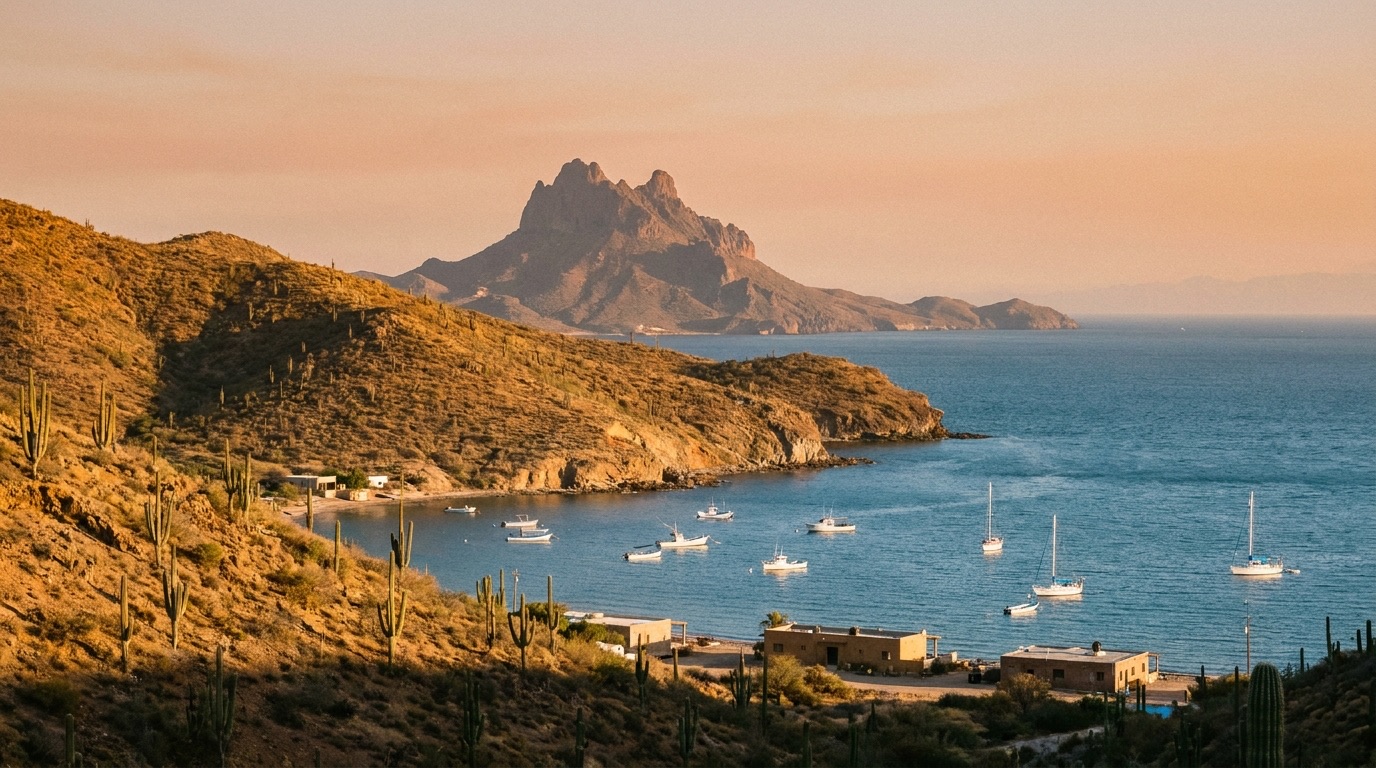
Most buyers who find Loma del Mar ask two questions early on: how did a community of Americans and Canadians end up on a hillside above San Carlos, and why does ownership here work the way it does? The answers are the same story. The way Loma del Mar was founded in the late 1970s explains the membership model, the San Carlos Trailer Club and the fideicomiso that buyers still use today.
This post tells that story using what the community itself records on its history page, with a little outside context where it helps. We've kept it to what's documented. Where the record is thin, we say so instead of filling the gaps.
The early years: why foreigners can't simply buy coastal land
The story starts long before the park. The community's history page explains it this way: more than a century ago, many foreigners bought land close to Mexico's northern border, and in time some of those owners wanted to break away from Mexico, with help from the United States. The loss of Texas and the Mexican-American War that followed cost Mexico about half of its national territory; the treaty that ended the war in 1848 set much of today's border.
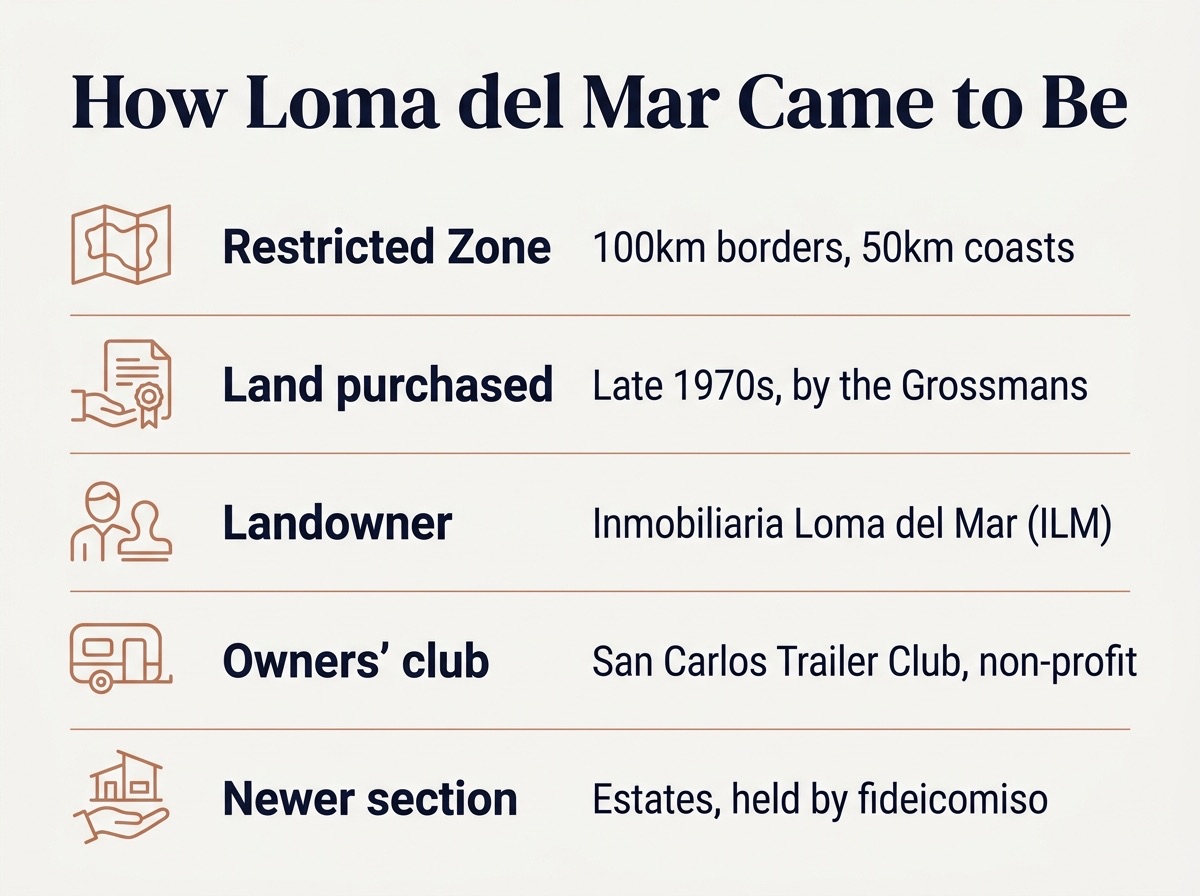
To keep that from happening again, Mexico created what the history page calls a "Forbidden Zone," now usually called the Restricted Zone. Under Article 27 of the Mexican Constitution, foreigners can't hold land directly within 100 kilometers of the borders or 50 kilometers of the coast. They can own there through a bank trust (a fideicomiso) or through a Mexican company.
San Carlos sits on the coast of the Sea of Cortez, well inside that coastal band. So anyone who wanted to build a foreign-friendly community here had to work within those rules. That's exactly what the founders of Loma del Mar did.
The late 1970s: the Grossmans and a recreational park
In the late 1970s, Mr. and Mrs. Grossman bought the land now known as Loma del Mar. They set up a Mexican corporation, Inmobiliaria Loma del Mar (ILM), to own the land. ILM then applied for and received a license from the State to build a recreational park: Loma del Mar.
The next step is the one that still shapes daily life here. Because foreigners couldn't be part of a corporation that owned land in the zone, the Grossmans set up a separate club, the San Carlos Trailer Club (SCTC), as a non-profit organization, and began selling "memberships."
That's the origin of the membership model. The land stayed with the Mexican corporation, as the law required, while foreign buyers joined the club and held their place in the park through it.
From trailers to homes: how the park changed
The name gives away how it began. Loma del Mar was originally a trailer park, with trailers and motorhomes. Over time, owners added casitas (little houses), ramadas (covered parking) and bodegas (storage buildings) alongside them.
Eventually the park became a mix of unique homes, including full-size luxury houses. Today you'll find casitas, cottages and full-size homes side by side, with no two quite alike, tied together by Mexican architectural principles. Some lots still have RV and 5th-wheel hookups, a reminder of where it all started.
The community's own record doesn't give a decade-by-decade account of that change, and we'd rather not invent one. If you want to know how a particular street or home evolved, the SCTC office and longtime owners are the best people to ask when you visit.
How the founders' structure works today
The legal structure the Grossmans set up is still in place, and it's why the FAQ can say Loma del Mar has operated this way since the 1970s.
| Then | Now |
|---|---|
| ILM owns the land under a state license for a recreational park | ILM still owns the land and holds the state license |
| SCTC formed as a non-profit club | San Carlos Trailer Club A.C. is the non-profit association every owner joins |
| Buyers purchased "memberships" | In the Original Area, you still buy a membership |
| Trailers and motorhomes | Casitas, cottages and full-size homes |
Two things have been added along the way:
- The Estates Section. This newer area operates as a Mexican condominium, where the land can be purchased and held outright through a fideicomiso bank trust.
- An elected board. The SCTC is run by an elected Board of Directors made up of residents. It hires the park staff, provides 24-hour security and maintenance, and bills members for their share of upkeep and utilities.
In the Original Area, a membership gives you the improvements on the lot (the buildings and furnishings) and exclusive use of the land for a set term, which can be extended in increments, much like a lease. Both types of ownership grant full access to the park and its amenities. The details, including the term, renewals and fees for a given property, are confirmed in writing before you buy. How Buying Works explains it in plain English.
What the history means for buyers
Strip away the dates and the story has a simple spine. The founders found a legal, durable way for foreigners to live on this hillside, and the club they created is still run by the people who live there.

That history answers a few practical questions:
- Is this legal and established? Yes. Both the membership model and the fideicomiso are long-established, government-recognized ways for foreigners to own in the Restricted Zone, and Loma del Mar has worked this way since the 1970s.
- Who's in charge? The residents, through the SCTC's elected board, not an outside developer.
- Why "Trailer Club"? Because that's how it started. The name stayed even as the homes changed.
- Can I pass it on? Yes. Both memberships and fideicomiso trusts can be passed to your heirs.
If you're comparing Loma del Mar with other options in San Carlos, our guide to buying a home in San Carlos as a foreigner puts the fideicomiso in wider context, and casita vs. custom home looks at the kinds of homes the park has become known for.
Come see where it started
History reads better from the hill where it happened. Walk the community, see how the old trailer lots turned into today's homes, and ask the office about the streets that interest you. Jason Thompson of Vive Real Estate handles every Loma del Mar sale and has sold real estate in San Carlos since 2013. Contact Jason to plan a visit or a video walkthrough, or message him on WhatsApp with no pressure.
Written by
Jason Thompson
Real Estate Agent, Vive Real Estate
Jason grew up spending winters in San Carlos as a snowbird with his parents. In 2000, he made it his full-time home. He has been selling real estate here since 2013, and he's fluent in English and Spanish. When he's not working, he's snorkeling, kayaking, or metal detecting under water. Jason loves this town, and he's happy to help anyone who wants to make it home too.